Showing posts with label Articles. Show all posts

For Whom is Hajj Obligatory

0 comments

Hajj is obligatory on every adult, free, sane, healthy, Muslim, once in his life-time, provided he has sufficient money for the expenses of the journey and for the maintenance of his dependents during his absence abroad, and provided the under taking of the journey world be safe and there would be no danger to his life.

Read More »

Mr Bean - Rowan Atkinson convert to Islam

0 comments

Arab and international The king of silent comedy” Mr Bean” announced his conversion to Islam News networks picked up on the social networking site, and other websites morning news announcement Global Islam comedian Rowan Atkinson’s famous “Mr Bean”.
And surprised the comedian famous “Mr Bean” middle and artistic world by announcing entry in the Islamic religion.
And the relocation of “echo my” word Mr Bean shows from which the film was offensive to the Prophet – peace be upon him – was a major reason for the discovery of a teacher this true religion, and did not want Mr Bean authorizing the channels of information so, as it could only raise his finger testimony.
According to some sources, interested according to the site, Sheikh Rashid Ghannouchi Contact the name and the name of the Nahda Movement congratulatory telegram for this artist Qadeer congratulating, calling him stable on the road to the right, waiting to send an official mission to congratulate him.
The site indicates that Sheikh Rashid relationship with “Mr Bean” is related to ancient days was in London. Sheikh has long been a good mentor.
The advantage of this artist’s legendary talent does not possess any artist alive, comedy silent is the home first which is not rivaled by any artist where ever, its launch was in the theater and excelled in hundreds of figures varied but the public is still asking him to return to his unique (Mr Bean).


Read More »

The Truth about Shab E Barat - Laila-tul-Mubarika

0 comments
The Truth about Shab E Barat:

The month of Sha’ban is the eighth month of the Islamic lunar calendar. The fifteenth night of this month is known as Laylatul Bara’ah or Laylatun Nisfe min Sha’ban in the Arab world. In India, Pakistan, Bangladesh, Iran, Afghanistan, etc., it is known as Shab-e-barat.

THE BELIEVES ABOUT THIS DAY:

1. Some people believe that in Surah al-Dukhan (44:3-4) there is a reference to this night as Allah says, “We sent it (the Qur’an) down during a blessed night. We are truly warners. In that night is made distinct every affair of wisdom”

-But the night referred to here cannot be a Sha’ban night, because it is said here clearly that the Qur’an was revealed in this night. We know from the Surah al-Qadr (97) that the Qur’an was revealed in the night of Qadr and we also know from the Qur’an (Al-Baqarah 2:185) that the Qur’an was revealed in the month of Ramadan, so it is obvious that the night of the revelation of the Qur’an was in Ramadan, not Sha’ban, and that it was Laylatul Qadr not Shab-e-barat (or the Sha’ban night).

2. Some people also say that in the 2nd year of Hijrah, the direction of Qiblah was changed from Jerusalem to Ka’bah (Makkah) on the 15th day of Sha’ban.

-This report is also not confirmed by authentic Ahadith.

According to most of the scholars of Tafsir, the Qur’an has not mentioned anything about the Sha’ban night. There are some Ahadith that speak about the Middle of Sha’ban and its night. However, the scholars of Hadith say that most of the Ahadith concerning this night are not sound. They are weak (da’if) according to the criteria of the Muhaddithin.
THE SUPERSTTIONS ABOUT THIS DAY:

1. some people believe that the spirits (arwah) of the deceased visit their relatives during this night.

2. Some believe that there is a special Tree in the heaven upon whose leaves are the names of all human beings, and whatever leaves drop during this night, those people are destined to die in this year.

3. Some think that the decisions about the life and death of people are made during this night.

-All these beliefs and superstitions do not belong to the authentic teachings of the Qur’an and Sunnah.

HADITH ON (15TH) MID-SHABAN:

1. The Mother of the Believers Aisha [May Allah be pleased with her] reports I missed the Prophet one night so I went out to al-Baqi` (and found him). He said: "Were you afraid that Allah would wrong you and that His Prophet would wrong you?" I said: "O Messenger of Allah, I thought that you might have gone to visit one of your wives." He said: "Allah Glorious and Exalted descends to the nearest heaven on the night of mid-Shaban and He forgives to more people than the number of hairs on the hides of the sheep of the tribes of Kalb.

-Narrated from Aisha by Ahmad, Ibn Majah, and al-Tirmidhi who said that he heard al-Bukhari grading this Hadith as weak because some of the sub-narrators did not narrate directly from each other.

2. Abd Allah ibn `Amr [May Allah be pleased with him] reports that Prophet [Peace be upon him] said “Allah looks upon His creatures on the night of mid-Shaban and He forgives all His servants except two: one intent on hatred, and the homicide.”

- Narrated from Abd Allah ibn Amr by al-Tirmidhi, Ahmad and al Bazzar with a chain he graded fair (hasan) through the great Tabi’I jurist al-Qasim ibn Muhammad ibn bi Bakr al-Siddiq.

3. The Mother of the Believers Aisha [May Allah be pleased with her] reports, "The Prophet stood up in prayer during part of the night and made his prostration so lengthy that I thought his soul had been taken back. When I saw this I got up and went to move his big toe, whereupon he moved, so I drew back. When he raised his head from prostration and finished praying, he said: "O `A'isha, O fair little one (humayra')! Did you think that the Prophet had broken his agreement with you?" She replied: "No, by Allah, O Messenger of Allah, but I thought that your soul had been taken back because your stayed in prostration for so long." He said: "Do you know what night this is?" She said: "Allah and His Prophet know best." He said: "This is the night of mid-Sha`ban! Verily Allah the Glorious and Majestic look at His servants on the night of mid-Sha`ban, and He forgives those who ask forgiveness, and He bestows mercy on those who ask mercy, and He gives a delay to the people of envy and spite in their state."

- Narrated from Aisha by al-Bayhaqi in Shu’ab al Iman (3:382) where he comments: “This hadith is missing the Companion in its chain, and is a good Hadith (hadha mursal jayyid). It is probable that al-Ala’ibn al-Harith took it from Makhul and Allah knows best.”

4. Ali ibn Abi Talib [May Allah be pleased with him] reports that the Prophet [Peace be upon him] is reported to have said: “The night of mid-Shaban, let all of you spend in prayer and its day in fasting, for Allah descends to the nearest heaven during that night beginning with sunset and says: ‘Is there no one asking sustenance that I may forgive them? Is there no one asking sustenance that I may grant them sustenance? Is there no one under duress that I may relieve them? Is there not such-and-such, is there not such-and-such, a so forth until dawn rises’”

- Narrated from Ali by Ahmed and Ibn Majah with a chain containing Ibn Abi Sabra, Mufti Taqi Uthmani says regarding the authenticity of this hadith This Hadith is recorded by Ibn Majah in his Sunan, one of the famous six books of Hadith, and also by Baihaqi in his famous book Shu'ab-al-'iman'. Both of them have reported it without any comment about its authenticity. But after a critical analysis of its chain of narrators it is found that this tradition is mainly based on the report of Abu Bakr Ibn Abi Saburah whose narrations cannot be relied upon. That is why the scholars of Hadith have declared it as a weak (da'if) tradition. his memory was not of the standard required for the Authenticity of a tradition. That is why most of the critics and scholars of Hadith like Imam Bukhari etc. Have held him as weak.
SCOLARS OPINION:

AS THERE IS NO AUTHENTIC HADITH ABOUT MID SHABAN, BUT THERE ARE NUMBERS OF WEAK HADITH’S IN RELATION, THE OPINION OF THE SCHOLARS DIFFERED AT THIS POINT.
SOME OF THEM BELIEVED AS THERE ARE MANY (NEAR A DOZON) WEAK HADITH, SO, MID-SHABAN CARRIES SPECIAL IMPORTANCE, AND SPECIAL ACTS SHALL BE PERFORMED AT THIS NIGHT!
OTHERS BELIEVED THAT, AS MOST OF THE HADITH ARE WEAK OR THERE IS NOT A SINGLE SAHIH HADITH AMONG THEM, PERFORMING ANY SPECIAL ACT ON THIS SPECIFIC NIGHT IS BIDAH (INOVATION).
IN BRIEF, WHAT WE FIND IS-

1. There is no specific prescribed Salaah reserved for this night.

2. There is no specific form of Ibadah prescribed for this night.

-It was the noble habit of Rasoolullah Sallallahu alaihi wasallam to engage in ibadah during the last portion of every night. Ibadah was not restricted to the 15th of Shaban or any other specific night. Ayesha Radhiyallahu anha reports that Rasoolullah Sallallahu alaihi wasallam used to go to bed during the first portion of the night and he would stay awake the last portion of the night (spending it in ibadah). (Bukhari and Muslim)

3. Allah Ta'ala descends to the nearest heaven during the last third of every night. (Bukhari) This is not restricted to the 15th night of Sha'ban.

4. Visiting the graveyard is not a special characteristic of this night; it is proven from other authentic narrations that Rasoolullah Sallallahu alaihi wasallam would visit the graveyard during the last portion of many nights.

5. Fasting on the 15th of Sha'ban is not proven from any Sahih Hadith

- It is a misconception that the fast of the 15th of Sha'ban is Sunnah.
There is only one hadtih regarding fasting on this day but it is extremely weak, as one of its narrators, Ibn Abi Sabirah is extremely weak, has been accused of fabricating Ahaadith too. (Mizaan al-I'tidaal, p. 503)

- Fasting in the month of Sha'ban without the specification of any day is proven from Rasoolullah Sallallahu alaihi wasallam. Infact, he used to fast excessively during this month. (Narrated by al-Bukhârî, no. 1833; Muslim, no. 1956)

- Fasting on the13th, 14th and 15th of Every lunar month is proven from the Ahaadith.

8. The BLESSED NIGHT, mentioned in Surah Dukhan of the Quran, is the night of Qadr, and not the 15th night of Sha'baan.

9. The name Laylatul Bara'at was intoduced after a few centuries. Earlier Hadith books would mention Ahaadith regarding this night under the heading laylat al-Nisf min Sha'ban (Chapter on the night of the 15th of Sha'ban)

10. The custom of cooking a specific food for the 15th night of Sha'ban has no basis in the Qur'an or Sunnah. Nor does the lighting of lamps or having lighting outside the Masaajid as practised by some people.

11. It is the consensus (ijma) of all jurists that it is better for an individual to perform optional prayers in ones own home.

- It was the practice of Rasoolullah Salllallahu alaihi wasallam and the Sahaabah Radhiyallahu anhum to engage in any Nafl/optional prayers in their own homes.
………………………………………………………………………….
One can conclude from this that the customs and traditions prevalent today where people assemble on nights such as these have no base in the Qur'an or Sunnah.

Don’t engage in any form of Bid'ah, Success lies in obeying the commands of Allah and adhering to the teachings of our Prophet, Muhammad Sallallahu alaihi wasallam.

AND ALLAH KNOWS THE BEST.

Read More »

Sunnat Regarding Food and Drinks and Forbidden Food in Islam

0 comments
HOLY PROPHET'S SUNNAT REGARDING FOOD AND DRINK

A reference to the Holy Prophet's food habits and to his abstemiousness has been made at pages 149, 170 and 171, which may be reference to. From the authentic books of Ahadis, the Holy Prophet's Sunnat in regard to eating and drinking is briefly as follows :- He used to wash his hands before commencing his meal; he invariably recite "Bismillah-ir-Rahman-ir-Rahim" before starting to eat; he used his right hand for eating; he did not recline on a pillow or bolster but used to sit at the table-cloth in a respectful posture; he used to eat from the side of the plate or bowl in front of him; he used ti take small morsels and used to chew each morsel slowly and carefully; he never found fault with the food placed before him; if he relished it, he partook of it; otherwise he refrained from eating but never complained about the quality of the food; he did not allow food to be wasted and took in his plate only so much as he needed and he cleaned his plate; he washed his hands after eating; he invariably gave thanks to Allah after meals; one of his supplications as recorded in Tirmizi, Abu Dawood, Ibn Maja etc., is:- "Al-hamd-u-lillah-il-lazi at'amana wa saqana wa ja'alna min-al muslimin" (Praise to be Allah, Who has fed us and given us to drink and made us Muslim); he never ate any thing while standing, or walking in the streets; he never ate anything while standing and walking in the streets; he did not like a raw onion and raw garlic; he used to drink water, or milk, in three sips. while sitting and used to hold the bowl in his right hand l he advised his followers not to blow with their mouths into a bowl of milk etc ; he used to say ''Allhamdu-lilah'' after drinking milk or water; and he advised his following that, while dining together, they should have regard for others and not get up from the table-cloth while others were still eating.

FORBIDDEN FOOD

Specially for new Converted Muslims
Let us now consider the verses regarding forbidden food. These are :-2 : 173 : 5 : 4 ; 6 : 121, 145 ; and 16 : 115. The things forbidden by these verses are :-dead meat, blood, the flesh of swine, and that on which any other name has been invoked besides that of Allah ; that which has been killed by strangling, by a violent blow, or by a headlong fall, or by being gored to death ; that which has been (partly) eaten by a wild animal, unless you are able to slaughter it (in due form) ; that which is sacrificed on stone (altars) ; (forbidden) also is a division (of meat) by raffling with arrows ; that is impiety ; meat on which Allah's name has not been pronounced ; that would be impiety ; but if one is forced bu necessity, without  willful disobedience, nor transgressing due limits, then he is guiltless ; for Allah is Oft-forgiving, Most Merciful.

The following extracts from Abdullah Yusuf Ali's notes on these verses will make the position clear :-. . . . ."Maitat". . . . the original Arabic has a slightly wider meaning given to it in Fiqah (Religious Law) : anything that dies of  itself  and is not expressly killed for food with the Takbir duly pronounced on it. But there are exception, e.g. fish and locusts are lawful though they have not been made specially halal with the Takbir. But even fish or locusts as carrion would be obviously ruled out " . . . . . . ." Carrion on dead meat and blood as articles of food would obviously cause disgust to any refined person. So would swine's flesh where the swine live on offal. Where swine are fed artificially on clean food, the objections remain : (1) that they are filthy animals in other respects, and the flesh of filthy animals taken has food affects the eater : (2) that swine's flesh has more fat then muscle-building material : and (3) that it is more liable to disease than other kinds of meat: e. g. trichinosis, characterized by hair-like worms in the muscular tissue. As to foods dedicated to idols or false gods, it is obviously unseemly for the Children of  Unity to partake of it". As pointed out by another commentator, "that which dies of itself and that which was torn by beasts was forbidden by the law of Moses also (Lev. 17 : 15), so was blood (Lev. 7 :26) ; and the flesh of swine (Lev. 11 : 7)....The Jews held the swine in great detestation and the mention of the animal in Gospels shows that Jesus Christ held it in equal abhorrence, which proves that he too regarded the animal as impure. Neither does he appear to have broken the Jewish law in this respect''. To continue with Abdullah Yusuf Ali's notes :- ''If an animal dies by strangling or by a violent blow, or a headlong fall, or by being gored to death, or by being attacked by a wild animal, the presumption is that it become carrion, as the blood is congealed before being taken out of the body. But the presumption can be rebutted. If the life-blood still flows and the solemn mode of slaughter (Zibah) in the name of God as a sacrifice is carried out, it becomes lawful as food.''
''This (sacrifice on stone altars) was also an idolatrous rite. Different from that in which a sacrifice was devoted to a particular idol or false god.....Division of meat in this way (i.e. a sort of lottery or raffle practiced by Pagan Arabs) is here forbidden, as it is a form of gambling''. As regards the words ''damam masfuhan'' occuring in 6: 145, Abdullah Yusuf Ali has explained :- '' Blood poured forth : as distinguished from blood adhering to flesh, or the liver, or such other internal organs purifying the blood''

A part from the forbidden food specifically mentioned in the verses of the Holy Quran cited earlier, the meat of certain other animals was forbidden by the Holy Prophet. In the light of the Quranic verses and the Holy Prophet's traditions, our doctors of law have worked out the other detail. To put it briefly, (a) carnivora, (b) birds of prey which attack their prey with their claws and beaks, (c) birds of the air which eat nothing but carrion, (d) reptiles, and (e) insects, have been declared unlawful (Haram). The list includes :- lions, tigers, leopards, panthers, wolves, jackals, foxes, bears, elephants, donkeys, dogs, cats, monkeys, eagles, hawks, falcons, kites, crows, snakes, weasels, chameleons, lizards, rats, frogs, alligators, and crocodiles. On the other hand, declared as lawful (Halal) is the meat of horses, deer, antelopes and hare, and the flesh of fowls, such as cocks, hens, drakes, ducks, geeze, peacocks, partridges, pigeons, doves, quails, and sparrows. Fish and locusts have already  been mentionad above as being lawful.
Regarding other things, it may be explained here that the permission contained in 5 : 5 is obviously subject to the restrictions imposed by 5: 2 , 97 and 98 on hunting and the use of game while a person is Ihram or within the sacred precincts.

Read More »

Hazrat Umar (R.A)

0 comments
The Great Hero of ISLAM:
HAZRAT UMAR FAROOQ (R.A)
was the 1st man in the world,
who:
1-Made Army & Navy as a state department,
2-Introduced police system,
3-Introduced intelligence system & agencies,
4-Introduced disaster management cell,
5-Introduced Ehtisab council,
6-Introduced system of Districts,
7-Used fast horses 4 improving Post Office Services,
8-Introduced self support financial schemes,
9-Introduced revenue department,
10-Introduced idea of food, cloth, shelter etc;

Cambridge University U.k has placed Hazrat Umar (R.A)
as the most genius Ruler of all times.

Read More »

Concept of Angels In Islam

0 comments

Angels are celestial beings, who are not visible to ordinary mortals and thus belong to the category of ''unseen beings'', covered by the term 'ghaib'. Belief in angels in one of the cardinal articles of our faith and it forms the second ingredient thereof next only to faith in Allah (CF. Iman Mufassal, and 2:17 , 285; 4: 136).

Angels, Allah's creation; Their Limitation and Duties
Angels are one of Allah's creation and they are His honored servants (35:1; 37:150; 43:19; 21:26). They are not Allah's daughters. Angels have no knowledge save what Allah has taught them (2: 32. 33; 82: 12). They speak not before Allah speaks and the act in all things by His command (21: 27; 41:38) ; They do not grow weary and are not languid (21 :19, 20; 41: 38); nor are they proud (cf. 7: 206; 21: 19; 41: 38). They flinch not (from executing) the command they receive from Allah but do (precisely) what they are commanded (66: 6); they prostrated before Adam(A.S) when Allah commanded them to do so (2: 34; 7: 11; 15 :30 and several verses). Angels never fail in their duty (6: 61) Angels are the sinless beings.


Some of the angels have two (pairs of) wings, some three and some four (35:1). They range themselves in  :ranks and are strong in repelling (evil) (37:1 ,2): each of them has his appointed place -(37:164-166). Angels have various function and duties: they worship and glorify Allah and sing His praises and prostrate before Him (2:30 ; 4:172 ; 7:206 ; 13:13 ; 16:49 ; 39:75 ; 40:7). Angels act as Allah's messengers (35:1 ; 22:75); but they did not descend except by Allah's command (19:64). Angels were send by Allah to give tidings to Zakriya (3:39 ; 19:7) and to Maryam before whom the angel appeared in human form (3:42,45 ; 19:19-19). Angels also appeared in human form before Ibrahim to give him glad tidings of the birth of a son (11:69-76 ; 15:51-60 ; 29:31,32 : 51:24-30) and before Lut to warn him of the impending doom of his wicked people and o ask him to leave the towns that were going to be destroyed (11:77-83 ; 15:61-77 ; 29:33,34 ; 54:37). Angels came to Allah's chosen servants (prophets and apostles) with inspiration of His command (16:2 ; 40:15).

JIBRIL ; RUH-UL-QUDUS; RUH-UL-AMIN
The arch-angel, Jibril, (Ruh-ul-Qudus, Ruh-ul-Amin,) brought down Allah's revelation to the Holy Prophet's heart (2:97 ; 16:102 ; 26:192-195).

Angels strengthen the hearts of righteous believers and are their protectors (41:30,31). They implore forgiveness for the believers (40:7-9); but angels can offer no intercession except for those who are acceptable to Allah (21:28 ; 34:23 ; 53:26). Angels send blessing on the believers (33:43) and on the Holy Prophet (33:56).

RECORDING ANGELS: KIRAMAN KATIBIN
Angels record a man's deeds and words (10:21 ; 43:80 ; 45:28,29 ; 50:17,18 ; 28:10-12. Kiraman Katibin occurs in 82:11).

ANGEL OF DEATH
Angels take the souls of men on their death. Their taking the souls of unbelievers with violence and smiting their faces and backs are mentioned in some of the verses; also their taking the souls of believers gently. 'Malak-ul-Maut' is mentioned in 32:11.

At the battle of Badr angels strengthened the hearts of, and helped the, believers and cast terror into the hearts of the un-believers (8:9,10,12 ; 3:123,124).

As already mentioned, angels carried out Allah's command of the destruction of the wicked people of Lut.

Angels will accost the righteous believers on their entering heaven (13:23,24 ; 21:103).

Angels are also the guardians of hell fire (43:77 ; 39:71 ; 40:49,50 ; 66:6 ; 74:30,31).

MIKAL; ISRAFIL
The name of jibril and Mikal are mentioned in Quran, but not that of Israfil who will blow the trumpet-SUR-heralding the day of judgment.

Read More »

Conditions And Stipulations About Touching And Reading of Qur'an

0 comments

Apart from the psychological approach, there are certain objective conditions and stipulations in regard to the handling and reading of the Holy Book. ''none shall touch (the Holy Qur'an) but those who are clean'' (56 : 79). In pursuance of this Divine injuction, it has been laid down that is a person is in a starte of major ceremonial impurity, called 'Had-i-Akbar' he ust first take a bath in the prescribed manner regarding Ghusl. Before he can touch or read the Holy Qur'an; and that a person who is in a state of minor ceremonial impurity, called ''Had-i-Asghar' must first make ablution, or Wudu before touching or reading the Holy Book. There is no objection to reciting The Qur'an from memory (Without opening or touching the book) without Wudu while in a state of Had-I-Asghar. the clothes of the person whi intends to read the Holy Book should be clean and free from mputiry; and the place where he is to recite should alos be clean. Reading the book while in a state of intoxication is prohibited (4 : 43) : The use of alcohol and other intoxication is, of course, prohibited.

There are no restrictions in regard to the time when the Qur'an may be read. Apart from the Qur'anic verses regarding the recitation of the Qur'an, there are a large number of the Holy Prophet's sayings about great spiritual rewards of such reading. Recitation during the night and at dawn is considered of special merit.
Before starting the recitation of the Qur'an, we are required to seek refuge in Allah from the accursed Shaitan (16 : 98) by saying :- ''A'uzu billah-i minash shaitan-ir-rajeem''. We should thereafter recite ''Bismillah-ir-Rahman-ir-Rahim'' (In the name of Allah, Most Gracious, Most Merciful). The Bismillah is prefixed to each and every Surat of the Qur'an, except the 9th Surat viz, Tauba or Baraat.
We may read aloud or in a kiw tone but we are required to see that we do not disturb some one who is saying his regular prayers (Salah or Namaz) or has just lain down to go to sleep.This is because whenever the Qur'an is read, we must listen to it with full attention and should keep quiet. The Qur'an should be recited ''in slow, measured, rythmic tone''. Every word and every letter must be carefully and rightly pronounced. In 73:20, we are told:....''Read ye therefore of the Qur'an as much as may be easy for you...''. Allah tell us, again and again : ''We have indeed made the Qur'an easy to understand and remember'' (54 : 17 and 3 other verses). Mere parrot-like recitation will not produce the desire effect, or serve our purpose. We must try to understand the meaning and significance of the Message that our Creator has sent us. If one does not know Arabic, one should read some good translation and commentary. The Glorious Qur'an has been translated into practically all the principal languages of the woeld, both European and Asian, as also in some African languages.
Punctuation Marks
Most printed copies of the Qur'an contain printed instructions regarding the punctuation marks (called Rumuz-i-auqaf-i-Qur'an). Thses must be carefully studied and acted upon. The most important sign is a big circle O. This denotes the end of one ayat and the commencement of another Ayat. One must stop as this. Whereever there is small mim, a stop is absolutely necessary. One should also stop where there is a sign of 'ta' ; and one should also stop where 'Qif' is printed. here there is a sign of 'La' (which means no) inside the text, one must not stop. There are also som eother signs. A sign ''Ain'' indicates the end of the 'Ruku'.
Sajda Tilawat
Where the world ''Sajda'' is printed on the margin or on some world in the text, it means that the person who reads this Ayat-as also any one who hear it- must prostration (Sajda). If, however, the recitation is at a time when sajda is not permissible the reciter should say ''Samai'' na wa ata' na'' and perform the actual prostration later.

Read More »

Dilip Kumar (mohammed yousuf khan) arrives for umrah

0 comments
 Muhammad Yousuf Khan — the man whose screen-name Dilip Kumar became synonymous with the Indian movie industry — arrived in the Kingdom on a weeklong visit to perform Umrah, or the lesser pilgrimage.

The veteran actor is expected to arrive in Makkah Saturday.

The 90-year-old living legend is accompanied by his actress wife Saira Bano. They arrived at the Prince Mohammad Airport in Madinah from Mumbai on Wednesday night. The actor, who commands phenomenal popularity and following in the Subcontinent, was a picture of grace on arrival.

Dilip Kumar aka Muhammad Yousuf Khan thanked Allah for giving him the strength to go to Mecca at the age of 90.

"Allah has been kind that he's given me the strength to go on Umrah (pilgrimage) with Saira, Asif, Faisal... My doctor friends, few relatives are also accompanying me to Umrah. Keep me in your prayers," the thespian tweeted Wednesday.

Yousuf Khan and Saira Bano will arrive in Makkah in a day or two to complete the religious rituals and will leave for Mumbai from King Abdul Aziz International Airport in Jeddah in a week’s time.
--------------------

Relaxing after Juma'h prayers with @TheDilipKumar Prayed at Masjid Nabwi

Read More »

Islamic Marriage life

0 comments

He finished praying and walked over his wife.

He sat down with her an took her hands

He began to read something while he held her fingers.

She asked, “what are you doing?”

He answered…


I’ve finished my prayer and got ready to do Tasbih on your hands so we can share AJAR, and Insha’allah we will be together in paradise too” :)
How many of us actually do this or even think of doing such good deeds? Lets take the opportunity to start doing such good acts to increase love between our spouses InshaAllah.

Read More »

Islamic Views Wins on 21 December

0 comments
Only Allah The Only One God Know about the Dooms day.
Mayans Calender and other philosophies and  stories are fake.

Read The Qur'an and Sayings of the Last Prophet of God !
And know about the Signs of The Last Day The Day of Judgement !

  1. Appearance of the Mahdi atop a white horse
  2. The false messiah, Masih ad-Dajjal, shall appear as a great beast-like creature with one eye good and the other blind, and the mark of Kafir. He will claim to hold keys to heaven and hell and lead many astray, although believers will not be deceived.
  3. The return of Jesus Christ, from the seventh sky to assist the Mahdi against Dajjal
  4. Ya'jooj and Ma'jooj, two tribes of vicious beings which had been imprisoned will escape. They will ravage the earth, drink all its water, and destroy all life. Allah will eventually send worms and insects to wipe them out.
  5. Medina will be deserted, with true believers going to follow Mahdi and sinners following Dajjal
  6. A short legged and thin ruler of Ethiopia will attack Mecca and destroy the Kabah
  7. Dabbat al-ard, or the Beast of the Last Days will populate the entire planet
  8. A pleasant breeze will blow from Yeme that shall cause all believers to die
  9. The sun will rise from the west
  10. A first trumpet will sound, and all remaining humanity will die, followed by a period of forty years, at the end of which smoke will envelope the world for forty days
  11. The Qur'an will be taken to heaven and even the huffaz will not recall its verses
  12. A second trumpet will sound, the dead will return to life and a fire will start from Hadramawt in Yemen that shall gather all people of the world in Mahshar for the Qiy'amah

Read More »

Islamic Advises

0 comments
BEAUTIFUL ISLAMIC ADVISES!!!

# Fear ALLAH.
# If u speak, speak truth.
# Do not go after the world even though it may run after you

# Act to gain reward from ALLAH and for the Hereafter.
# Do not give up bidding for good and forbidding from evil lest the wrongdoers get positions over you and ur prayers will not b granted.
# Be an enemy of the oppressors and helper of the oppressed.
# Keep ur affairs in order.
# Maintain good relations among yourselves.
# Keep Allah in view in the matter of prayer, because it is the pillar of your religion.
# Keep Allah in the matter of your neighbours. Because they were the subject of the Prophet’s advice. He went advising in their favor till his friends thought he allow them a inheritance.
# Keep Allah in view in the matter of QURAN. No one should excel u in acting upon it.
# Keep Allah in view in the matter of jihad with the help of ur property, life and tongue in the way of Allah.
# Avoid turning away from one another and severing mutual relations.
# U should strive for regard in kinship and spending for others.
# Keep Allah in the matter of orphans. So do not allow them to starve and they shouldn’t b ruined in your presence.
# Keep Allah in view in the matter of Allah’s house. Do not forsake it so long as u live, because if it is abandoned, you won’t be spared.

Read More »

Zamzam water

0 comments


Bismillah,

Zamzam water is the best, most fresh, most beneficial, most beloved, purest and most precious water there is.


ZamZam water was dug up by the angel jibril and was the sourse the prophet baby Ismail drank from.


In the Sahihain it is narrated that the prophet s.a.w. said to Abu Thar, who remained at the Kaabah for forty days without food (or drink) living on only ZamZam.

Further more, Ibn Majjah narrated that Jabbir ibn Abdullah related from the prophet S.A.W. that he said
'ZamZam water is for whatever was intended behind drinking it.

We must realise from this that when drinking ZamZam water for a purpose and after making the intention then we must not say ' Lets TRY it as that defeats the purpose'
Rather we must believe that inshaAllah Allah swt will DEFINITELY cure us/ fulfill our intention inshaAllah.

Read More »

The Day of Judgment and Islam

0 comments
Dooms Day in 2012 ? According to Islam
The Day of Judgment  and Islam
Islamic eschatology is the branch of Islamic scholarship that studies the Yaum al-Qiyāmah, or Day of Judgment and Resurrection. Its tribulation is described in the hadith, Qur'an, and commentaries of Islamic expositors such as al-Ghazali, Ibn Kathir, Ibn Majah, al-Bukhari, and Ibn Khuzaymah. The Day of Judgment is also known as the Day of Reckoning, the Last Day and al-sā'ah, or the Hour.
The hadith, and to a lesser degree the Qur'an, provide detailed information about end time, describing the events of al-Qiyamah through twelve major signs. At the time of judgment, terrible corruption and chaos will rule. The Mahdi will be sent and with the help of Isa,
will battle Masih ad-Dajjal. They will triumph, liberating Islam from cruelty, and this will be followed by a time of serenity with people living true to religious values.
Like other Abrahamic religions, Islam also teaches resurrection of the dead, a final tribulation and eternal division of the righteous and wicked. Islamic apocalyptic literature describing Armageddon is often known as fitnah, malāhim, or ghaybah in Shī‘a Islam. Righteous are rewarded with pleasures of Jannah, while unrighteous are punished in Jahannam.

There are two main sources in Islamic scripture that discuss the Last Judgment, the Qur'an, which is viewed in Islam as infallible, and the hadith, or sayings of the prophet. Hadith are viewed with more flexibility due to the late compilation of the traditions in written form two hundred years after the death of Muhammad. The concept has also been discussed in commentaries of Islamic scholars such as al-Ghazali, Ibn Kathir, and Muhammad al-Bukhari.

Three periods

There are three periods before the Day of Judgment, also known as ahsratu's-sa'ah or alamatu qiyami's-sa'ah, with some debate as to whether the periods could overlap.
The first period began with the passing of Muhammad, while the second began with the passing of his Companions and ended a thousand years after that. Other events of the second period are the Tartar invasion, which occurred 650 years after Muhammad. The Mongols, led by Hulagu Khan, grandson of Genghis Khan, attacked Baghdad in 1258 CE and brought the Abbasid caliphate to an end. They massacred millions of Muslims, and the water of the river Tigris turned red with blood. The Qur'an also predicted a fire at Madinah in the Hijaz near Busra in Syria, which Islamic scholars believe occurred in 654 AH.

Twelve major signs

There are twelve major signs of Qiyamah, known as amaratu's-sa'ah al- kubra. The first sign will be the appearance of the Mahdi, whose arrival is awaited by the angel Israfil so that he may sound the horn signalling the end of days. The natural order will become reversed, including the sun, mountains and sea.[13]
The twelve signs are as follows:
  1. Appearance of the Mahdi atop a white horse
  2. The false messiah, Masih ad-Dajjal, shall appear as a great beast-like creature with one eye good and the other blind, and the mark of Kafir. He will claim to hold keys to heaven and hell and lead many astray, although believers will not be deceived.
  3. The return of Jesus Christ, from the seventh sky to assist the Mahdi against Dajjal
  4. Ya'jooj and Ma'jooj, two tribes of vicious beings which had been imprisoned will escape. They will ravage the earth, drink all its water, and destroy all life. Allah will eventually send worms and insects to wipe them out.
  5. Medina will be deserted, with true believers going to follow Mahdi and sinners following Dajjal
  6. A short legged and thin ruler of Ethiopia will attack Mecca and destroy the Kabah
  7. Dabbat al-ard, or the Beast of the Last Days will populate the entire planet
  8. A pleasant breeze will blow from Yeme that shall cause all believers to die
  9. The sun will rise from the west
  10. A first trumpet will sound, and all remaining humanity will die, followed by a period of forty years, at the end of which smoke will envelope the world for forty days
  11. The Qur'an will be taken to heaven and even the huffaz will not recall its verses
  12. A second trumpet will sound, the dead will return to life and a fire will start from Hadramawt in Yemen that shall gather all people of the world in Mahshar for the Qiy'amah

Minor signs

The second period will contain the minor signs known as ashratu's-sa'ah as- sughra. This is the period we are currently in, and will last for a length of time unknown to all but Allah. The minor signs are numerous, and include up to one-hundred different predictions. Some are as follows:
  1. People will speak and understand the Qur'an, but few will understand it, and even fewer will act on it
  2. Men will wear silky and effeminate clothing and marry other men
  3. Trade and wealth will flourish, but people will complain of lack of barakah
  4. Respect will be given according to wealth
  5. There will be abundant rain, but poor harvests
  6. Women will be more numerous than men
  7. Businesses will defraud customers
  8. Elderly will not be respected
  9. People will not care when their children are illegitimate
  10. Property will be unlawfully taken
  11. Life expectancy will decrease, jealousy will spread, and murder will be common
  12. The just will be unfairly accused, the wise ignored, and the deceitful shall become leaders
  13. Inanimate objects will speak
  14. There will be strange noises from the sky
  15. There will be fire west of Yemen
  16. There will be fighting over gold revealed by Euphrates
  17. Woman will give birth to their masters
Following the second period, the third will be marked by the twelve major signs.

The Mahdi

Mahdi (Arabic: مهدي‎) translates to 'guided one', with hadith being the primary source of his descriptions. His appearance will be the first sign of the third period. Hadith write that he will be a descendant of Muhammad through his daughter Fatimah and cousin Ali. The Mahdi will be looked upon to kill Al-Dajjal and end the prevalent disintegration of the Muslim community to prepare for the reign of Jesus who will rule for a time after. The Mahdi will similarly kill all enemies of the Prophet and fulfill the prophetic mission as a vision of justice and peace before following Jesus’ rule. The physical features of Mahdi are described in the hadith--he will be of Arab complexion and average height with a large belly, large eyes and a sharp nose. He will have a mole on his cheek, the sign of the prophet on his shoulder, and be recognized by the caliphate while he sits at his own home.
Our Mahdi will have a broad forehead and a pointed (prominent) nose. He will fill the earth with justice as it is filled with injustice and tyranny. He will rule for seven years. (Abu Dawud, Sahih, Vol. 2, p. 208; Fusul al-muhimma, p. 275)

Though the expected duration of his rule differs, Hadith go on to say that Allah will perfect him in a single night with inspiration and wisdom, and his name will be announced from the sky. He will bring back worship of true Islamic values, and bring the Ark of the Covenant to light. He will conquer Istanbul and Mount Daylam. His banner will be that of the prophet Muhammad: black and unstitched, with a halo. Unopened since the death of Muhammad, the banner will unfurl when the Mahdi appears. He will be helped by angels and others that will prepare the way for him. He will understand the secrets of abjad.

Differing perspectives on the Mahdi 

Sunni and Shi'ite Islam have different beliefs on the identity of Mahdi. Historically, Sunni Islam has derived religious authority from the caliphate, who was in turn appointed by the companions of Muhammad at his death. The Sunnis view the Mahdi as the successor of Mohammad, the Mahdi is expected to arrive to rule the world and reestablish righteousness. [23] Various Sunnis also share a parallel belief that though there may be no actual Mahdi, the existence of mujaddid will instead lead the Islamic revolution of a renewal in faith and avoidance of deviation from God’s path. Such an intellectual and spiritual figure of Sunni tradition has been attributed to numerous Muslims at the end of each Muslim century from the origin of Islam through present day.
Twelver Shi'a Islam, in distinction, followed the bloodline of Muhammad, favoring his cousin and son by marriage, Ali. Ali was appointed the first Imam, and following him there were eleven more. Muhammad al-Mahdi, otherwise known as the twelfth imam, went into hiding in 873 AD at the age of four. His father was al-`Askari, and had been murdered, and so he was hidden from the authorities of the Abbasid Caliphate. He maintained contact with his followers until 940 AD, when he was hidden. Twelver Shia Islam believes that al-Mahdi is the current Imam, and will emerge at the end of the current age as the Ahmadi described in scripture. Some scholars say that, although unnoticed by others present, the Mahdi of Twelver Shi'a Islam continues to make an annual pilgrimage while he resides outside of Mecca. In distinction, Sunni Islam foresees him as a separate and new prophet. The present Ayatollahs of Saudi Arabia see themselves as joint caretakers of the office of the Imam until he returns, with Ayatollah Khomeini having claimed that he specifically was a descendant of the seventh Imam, and rightful ruler of the Shi'ites.
The Mahdi is not described in the Qurʾān, only in hadith, with scholars suggesting he arose when Arabian tribes were settling in Syria under Mo’awiya. “They anticipated ‘the Mahdi who will lead the rising people of the Yemen back to their country’ in order to restore the glory of their lost Himyarite kingdom. It was believed that he would eventually conquer Constantinople.”


Claimants of the Mahdi

Throughout history, there have been multiple claimants to the role of Mahdi that had come into existence through their pious deeds and by subsequently acquiring their own following. One of these men, Muhammad al-Hanifiyya who was the fourth Sunni Caliph, was said to have judgment and character over rival caliphs and mysteries of his death arose in the 8th century. It was believed he had in fact not died and would one day return as the Mahdi. The sect of Mahdavis arose as followers of another claimant, Muhammad Mahdi of Janpur in the 15th century. Furthermore, a potential Mahdi, Muhammad Ahmad of Sudan, was believed to hold the title following his self-proclamation in 1881 and stand against the Turco-Egyptian government as well as the British. Additionally, Mīrzā Ghulām Aḥmad of Punjab claimed to be the Mahdi during the same period as Muhammad Ahmad and though considered by Orthodox Muslims to be a heretic, though he amassed a substantial following and is credited with founding the sect of Ahmadiyya. It should not be forgotten that two linked Shi'i movements, that of the Babis and that of the Baha'is believed (and believe) that their prophets, Sayyid 'Ali Muhammad, the Bab (d. 1850) and Mirza Husayn 'Ali Nuri, Baha' Allah were fulfillers of prophecy. The Bab is the thought to be the return of the Twelfth Imam and Baha' Allah the Mahdi. Since the Baha'is now preach a fairly successful international religion with possibly 6 million followers, ther concept of a fulfillment of Islamic prophecy is now current well outside the Islamic world.

Isa

Isa is the Arabic name for Jesus Christ, and his return is considered the third major sign of last days, while the second is the appearance of Masih ad-Dajjal. Although Muhammad is the preeminent Prophet in Islam, Jesus is the only Prophet who is said not to have died but rather raised up to Allah. Thus, in accordance with post-Quranic legend, he could conceivably return to Earth as a just judge on the Day of Judgment. As written in hadith:
Abu Hurayrah narrates the the Messenger of Allah said, "By Him in whose hands my soul rests! It is definitely close in that time that Isa, Son of Maryam descends amongst you as a just ruler. He will break the cross, kill the swine and abolish jizya. And money will abound in such access that no one will accept it.
—Ahmad bin Hambal, al-Musnad, vol 2, p. 240
Hadith reference both the Mahdi and Isa simultaneously and the return of the Mahdi will coincide with the return of Christ. He will descend from the heavens in al-Quds at dawn. The two will meet, and Mahdi will lead the people in fajr prayer. After the prayer, they will open a gate to the west and encounter Masih ad-Dajjal. After the defeat of ad-Dajjal, Isa will lead a peaceful forty-year reign until his death. He will be buried in a tomb beside Muhammad in Medina. Though the two most certainly differ regarding their role and persona in Islamic eschatology, the figures of the Mahdi and Isa are ultimately inseparable for according to the Prophet. Though Isa is said to descend upon the world once again, the Mahdi will already be present.
What will be your reaction when the son of Mary (Jesus) descends and your Imam is from among yourselves? (Sahih Muslim, bab nuzul 'isa, Vol. 2; Sahih Bukhari, kitab bad' al-khalq wa nuzul 'isa, Vol. 4)


Al-Dajjal

Al-Dajjal or the Antichrist or False Messiah does not appear in the Quran but is a prominent figure in the Hadiths and Islamic eschatology as a whole. He appears gruesome and is blind in his right eye. His one eye is thought to be a symbol that correlates with how single minded he is in achieving his goal of converting Muslims to his side. Al-Dajjal has the intention of gaining followers through his miracle working abilities and apparent wealth and generosity. These abilities are a test for true believers of Islam, who have been warned about his power and must resist his material temptations. He is thought to appear prior to the Day of Judgement, where he will engage in an epic battle with and be killed by either Jesus (according to Sunni tradition) or the Mahdi (according to the Shia tradition). Al-Dajjal functions symbolically as a key cog in overall Islamic eschatological picture, which emphasizes the world coming to an end, of good finally triumphing over evil, and of the remarkable events that will prefigure the replacement of the mortal world with a more authentic form of existence in the afterlife. Various Muslim political movements use the concept of Al-Dajjal to comment on contemporary events, and often identify him with opposing regimes or other worldly forces that they consider as harmful to Islam.

Ya'juj and Ma'juj

The fourth major sign of end time will be that the wall which imprisons the nations of Ya'juj and Ma'juj will break, and they will surge forth. Some Islamic scholars, such as Imran Nazar Hosein, believe the wall began to crack during the life of Muhammad. This is supported in the hadith when the prophet mentions that "a hole has been made in the wall containing the Ya'juj and Ma'juj", indicating the size of the hole with his thumb and index finger. Their release will occur forty years prior to the Last Judgment:
But when Ya'jooj and Ma'jooj are let loose and they rush headlong down every hill and mountain
—Qur'an 21:96
They will ravage the earth. Ultimately, Allah will send worms and insects to destroy them.


Major Events

Desertion of Medina, destruction of Mecca, and the Beast of the Earth

The fifth sign is that Medinah will be deserted, and all that remains in the city will be date palms. The just will have gone to join Mahdi, and the evil to Dajjal. Medinah will have been depopulated for forty years by the time of al-Qiyama. The sixth sign is that a thin ruler with short legs from Ethiopia will attack Mecca and destroy the Kabah.
The seventh sign is written in the Ahadith, and is the appearance of the da'ba-tul-ard, or the Beast of the Earth, who will populate the entire world and judge the wicked:
And when the Word is fulfilled against [the unjust], We shall produce from the earth a Beast to [face] them: he will speak to them, for that mankind did not believe with assurance in our Signs.
—Qur'an 27:82
The entire world will be engulfed by dukhan, or smoke, for forty days and there will be three huge earthquakes. The Qur'an will be taken to the heavens and even the huffaz will not recall its verses. Finally, a pleasant breeze will blow that shall cause all believers to die, but infidels and sinners will remain alive. A fire will start from Hadramawt in Yemen that shall gather all the people of the world in the land of Mahshar, and al-Qiyamah will commence

al-Qiyamah

The eighth sign is a breeze bearing a pleasant scent will emanate from Yemen, causing the awliya, sulaha and the pious to die peacefully once they inhale it. After the believers die, there will be a period of 120 years during which the world will hold only kafirs, sinners, oppressors, liars and adulterers, and there would be a reversion to idolatry.
The ninth sign is the rising of the sun from the West after a long night, which after midday will set again. According to Hadith:
Abu Hurayrah states that the Messenger of Allah (swt) A said, “The Hour will not be established until the sun rises from the West and when the people see it they will have faith. But that will be (the time) when believing of the soul, that will have not believed before that time, will not benefit it.
—Ibn Maja, as-Sunan, vol. 2 p 1352-53
The final signs will be nafkhatu'l-ula, when the trumpet will be sounded for the first time, and which will result in the death of the remaining sinners. Then there will be a period of forty years.
The eleventh sign is the second sounding of the trumpet, at which time the dead will be resurrected as ba'as ba'da'l-mawt. All will be naked and running to the Place of Gathering, while the enemies of Allah will be travelling on their faces with their legs upright. Muhammad himself will be travelling on a buraq accompanied by 70,000 angels. The Day of Judgment or Resurrection, al-Qiyāmah, relates to one of the six aqīdah in Sunni Islam, and seven aqidah in Shī‘a belief and is a basic tenet of Islam.
The dead will stand in a grand assembly, awaiting a scroll detailing their righteous deeds, sinful acts and ultimate judgment. Muhammad will be the first to be resurrected.
Punishments will include adhab, or severe pain, and khizy or shame.There will also be a punishment of the grave between death and the resurrection.


 From Wikipedia, the free encyclopedia


Read More »

5 Black Americans Muslims

0 comments
Top Five Black American people who Convert to Islam
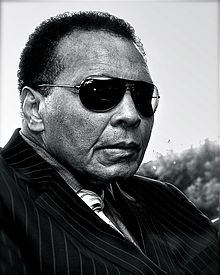
1.Muhammad Ali

Muhammad Ali (born Cassius Marcellus Clay, Jr.; January 17, 1942) is an American former professional boxer, philanthropist and social activist. Considered a cultural icon, Ali has both been idolized and vilified.
Originally known as Cassius Clay, at the age of 22 he won the world heavyweight championship from Sonny Liston. Ali changed his name after joining the Nation of Islam in 1964, subsequently converting to Sunni Islam in 1975. In 1967, three years after Ali had won the heavyweight championship, he was publicly vilified for his refusal to be conscripted into the U.S. military, based on his religious beliefs and opposition to the Vietnam War. His 1966 statement, "Man, I ain't got no quarrel with them Viet Cong", was one of the more telling remarks of that era.

Ali was eventually arrested and found guilty on draft evasion charges; he was stripped of his boxing title, and his boxing license was suspended. He was not imprisoned, but did not fight again for nearly four years while his appeal worked its way up to the U.S. Supreme Court, where it was eventually successful.
Ali would go on to become the first and only three-time lineal World Heavyweight Champion.
Nicknamed "The Greatest," Ali was involved in several historic boxing matches. Notable among these were three with rival Joe Frazier, which are considered among the greatest in boxing history, and one with George Foreman, where he finally regained his stripped titles seven years later. Ali was well known for his unorthodox fighting style, epitomized by his catchphrase "float like a butterfly, sting like a bee", and employing techniques such as the Ali Shuffle and the rope-a-dope. Ali brought beauty and grace to the most uncompromising of sports and through the wonderful excesses of skill and character, he became the most famous athlete in the world. He was also known for his pre-match hype, where he would "trash talk" opponents, often with rhymes.
In 1999, Ali was crowned "Sportsman of the Century" by Sports Illustrated and "Sports Personality of the Century" by the BBC.

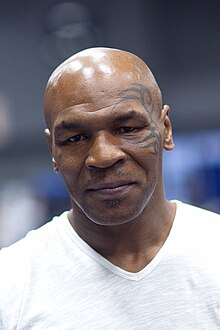
2.Mike Tyson
 
Michael Gerard "Mike" Tyson (also known as Malik Abdul Aziz) (born June 30, 1966) is a retired American professional boxer. Tyson is a former undisputed heavyweight champion of the world and holds the record as the youngest boxer to win the WBC, WBA and IBF heavyweight titles at 20 years, 4 months, and 22 days old. Tyson won his first 19 professional bouts by knockout, 12 of them in the first round. He won the WBC title in 1986 after defeating Trevor Berbick by a TKO in the second round. In 1987, Tyson added the WBA and IBF titles after defeating James Smith and Tony Tucker. He was the first heavyweight boxer to simultaneously hold the WBA, WBC and IBF titles, and the only heavyweight to successively unify them.
In 1988, Tyson became the lineal champion when he knocked out Michael Spinks after 91 seconds. Tyson successfully defended the world heavyweight championship nine times, including victories over Larry Holmes and Frank Bruno. In 1990, he lost his titles to underdog James "Buster" Douglas, by a knockout in round 10. Attempting to regain the titles, he defeated Donovan Ruddock twice in 1991, but he pulled out of a fight with undisputed heavyweight champion Evander Holyfield due to injury. In 1992, Tyson was convicted of raping Desiree Washington and sentenced to six years in prison but was released after serving three years. After his release, he engaged in a series of comeback fights. In 1996, he won the WBC and WBA titles after defeating Frank Bruno and Bruce Seldon by knockout. After being stripped of the WBC title, Tyson lost his WBA crown to Evander Holyfield in November 1996 by an 11th round TKO. Their 1997 rematch ended when Tyson was disqualified for biting Holyfield's ear.
In 2002, he fought for the world heavyweight title at the age of 35, losing by knockout to Lennox Lewis. He retired from professional boxing in 2006, after being knocked out in consecutive matches against Danny Williams and Kevin McBride. Tyson declared bankruptcy in 2003, despite having received over US$30 million for several of his fights and $300 million during his career. Tyson was well known for his ferocious and intimidating boxing style as well as his controversial behavior inside and outside the ring. Tyson is considered one of the best heavyweights of all time. He was ranked No. 16 on The Ring's list of 100 greatest punchers of all time. and No. 1 in the ESPN.com list of "The hardest hitters in heavyweight history". He has been inducted into the International Boxing Hall of Fame and the World Boxing Hall of Fame.

3. Ice Cube
 
O'Shea Jackson (born June 15, 1969), better known by his stage name Ice Cube, is an American rapper, record producer, actor, screenwriter, film producer, and director. He began his career as a member of the hip hop group C.I.A. and later joined the rap group N.W.A (Niggas With Attitudes). After leaving N.W.A in December 1989, he built a successful solo career in music, and also as a writer, director, actor and producer in cinema. Additionally, he has served as one of the producers of the Showtime television series Barbershop and the TBS series Are We There Yet?, both of which are based upon films in which he portrayed the lead character.
Cube is noted as a proficient lyricist and storyteller and is regarded as a brutally honest rapper; his lyrics are often political as well as violent, and he is considered one of the founding artists in gangsta rap. He was ranked #8 on MTV's list of the 10 Greatest MCs of All Time, while Snoop Dogg himself ranked Ice Cube as the greatest MC of all time. About.com ranked him #11 on its list of the "Top 50 Greatest MCs of Our Time." Allmusic has called him one of hip-hop's best and most controversial artists, as well as "one of rap's greatest storytellers." In 2012, The Source ranked him #14 on their list of the Top 50 Lyricists of All Time.

4.T-Pain


Faheem Rasheed Najm (born September 30, 1985), who goes by his stage name T-Pain, is an American singer-songwriter, rapper, record producer, and actor. His debut album, Rappa Ternt Sanga, was released in 2005. In 2007, T-Pain released his second studio album Epiphany, which reached number one on the Billboard 200. His third studio album, Thr33 Ringz, was released in 2008. T-Pain has earned two Grammy Awards alongside artists Kanye West and Jamie Foxx.
T-Pain is the founder of the record label Nappy Boy Entertainment, established in 2005. Throughout his career as a singer, T-Pain has extensively used the Auto-Tune pitch correction effect.

5.Lupe Fiasco
 
Wasalu Muhammad Jaco (born February 16, 1982), better known by his stage name Lupe Fiasco , is an American rapper, record producer, and entrepreneur. He rose to fame in 2006 following the success of his debut album, Lupe Fiasco's Food & Liquor. He also performs as the frontman of rock band Japanese Cartoon under his real name. As an entrepreneur, Fiasco is the chief executive officer of 1st and 15th Entertainment.
Raised in Chicago, Fiasco developed an interest in hip hop after initially disliking the genre for its use of vulgarity. After adopting the name Lupe Fiasco and recording songs in his father's basement, 19-year-old Fiasco joined a group called Da Pak. The group disbanded shortly after its inception, and Fiasco soon met rapper Jay-Z who helped him sign a record deal with Atlantic Records. In September 2006, Fiasco released his debut album Lupe Fiasco's Food & Liquor on the label, which received three Grammy nominations. He released his second album, Lupe Fiasco's The Cool, in December 2007. The lead single "Superstar" peaked at number 10 on the Billboard Hot 100. After a two-year delay, Lasers was released in March 2011 to mixed reviews, with lead single "The Show Goes On" peaking at number 9 on the chart. Food & Liquor II: The Great American Rap Album Pt. 1 was released in September 2012.
In addition to music, Fiasco has pursued other business ventures, including fashion. He runs two clothing lines, Righteous Kung-Fu and Trilly & Truly; he has designed sneakers for Reebok. He has been involved with charitable activities, including the Summit on the Summit expedition, and in 2010 he recorded a benefit single for victims of the 2010 Haiti earthquake. Fiasco is also noted for his anti-establishment views, which he has expressed in both interviews and his music.


Read More »

VIRTUES OF SURAH AL-KAHF !

0 comments
VIRTUES OF SURAH AL-KAHF !

DESCENDING OF TRANQUILITY

Imam Ahmad recorded that Al-Bara' said: "A man recited Al-Kahf and there was an animal in the house which began acting in a nervous manner. He looked, and saw a fog or cloud overhead. He mentioned this to the Prophet, who said:

Keep on reciting so and so, for this is the tranquility which descends when one reads Qur'an or because of reading Qur'an

This was also recorded in the Two Sahihs. The man who recited it was Usayd bin Al-Hudayr

PROTECTION FROM DAJJAL

Imam Ahmad recorded from Abu Ad-Darda' that the Prophet said: Whoever memorizes ten Ayat from the beginning of Surah Al-Kahf will be protected from the Dajjal.

This was also recorded by Muslim, Abu Dawud, An-Nasa'i and At-Tirmidhi.

According to the version recorded by At-Tirmidhi, Whoever memorizes three Ayat from the beginning of Al-Kahf. He said, it is "Hasan Sahih.''

ILLUMINATION B/W CONSECUTIVE FRIDAYS

In his Mustadrak, Al-Hakim recorded from Abu Sa`id that the Prophet said: Whoever recites Surah Al-Kahf on Friday, it will illuminate him with light from one Friday to the next. Then he said:

"This Hadith has a Sahih chain, but they (Al-Bukhari and Muslim) did not record it.''

A LIGHT ON THE DAY OF RESURRECTION

Al-Hafiz Abu Bakr Al-Bayhaqi also recorded it in his Sunan from Al-Hakim, then he narrated with his own chain that the Prophet said:Whoever recites Surah Al-Kahf as it was revealed, it will
be a light for him on the Day of Resurrection.

Source : Tafsir Ibn Kathir


Read More »

Sonny Bill Williams embraces Islam

0 comments
New Zealand rugby player Sonny Bill Williams embraces Islam
He's converted from a rugby league teen sensation into an All
Black juggernaut, and along the way become a promising
heavyweight boxer.


But Sonny Bill Williams has also made a spiritual conversion to
Islam.
While rumors of the 25-year-old sporting superstar's religious
beliefs have circulated for some time, the Herald on Sunday can
reveal he made the leap of faith two years ago.
He has since become the first Muslim to wear the All Black jersey,
and requested halal food during the Northern Hemisphere tour
last year.
The Muslim holy month of Ramadan, when followers are
forbidden from eating between dawn and sunset, falls in August
this year - when the All Blacks play three Tri Nations matches. It is
during the final build-up to the Rugby World Cup.
Williams regularly attends Friday prayer sessions at a Christchurch
mosque, according to friends.
Federation of Islamic Associations of New Zealand first vice-
president Javed Khan said his allegiance was commonly known
among the Muslim community.
"He is practicing the religion and he is a great role model for the
youngsters. We will pray to Allah that he will win the World Cup
for us. Everyone talks about it you know. The Muslim community,
everyone knows everyone, you know."
Williams' manager Khoder Nasser and mentor, league star and
boxer Anthony Mundine, are both Muslims, as is his brother
Johnny, who lives with him in Christchurch.
Williams' friend Tairek Smith said he had regularly prayed with
the 1.91m, 108kg second five-eighth since he embraced the Sunni
branch of Islam during a ceremony at the Regent's Park mosque
in Sydney's western suburbs in 2008, where former Canterbury
Bulldogs teammate Hazem El Masri attends.
All Black manager Darren Shand said the star's religious beliefs
had a "minimal" impact on the team.
He said: "He has talked to us about his dietary needs and we do
make some concessions there. We request halal beef and so on
but he doesn't make a big deal of it.
"We always leave players' religious affiliations and a lot of those
holistic things outside of the game. That's their personal life and
they decide what they do."
When asked if his faith clashed with the All Blacks' philosophy
for encouraging players to be free thinking and self reliant,
Shand said Williams was a "sponge" for information.
"That's why he is so good at all the sports he has been involved
in. He just ticks all the boxes. He wants to be the best."
Since converting to Islam, Williams has put a string of
embarrassing alcohol-related incidents behind him.

Read More »

Life and Islam

0 comments
Allah Subhanahu Wa Taa'la created man on this earth to test him whether he is obedient, or denies his Lord and disobedient. He puts man through good and bad conditions to see what is his reaction.

The life of this world is just a testing period and a place to do deeds; only in the life of the Hereafter the real results will be declared by the One Who is All Knowing and Well-Aware of everything.

T
his world is not a place for full rewards, nor is this world a place for complete punishments; but a place for doing deeds.

When someone does evil deeds, Allah may warn him with a punishment in this world, so that he may realize his mistake and improve his conduct; and at times Allah punishes a whole community so they may serve as a warning to mankind, and at times, He extends the rope of the evil-doers and does not punish them in this life at all, so that they may get a full recompense for their evil deeds in the Hereafter.

The more pious and Allah-fearing the person, the more he/she is tested by Allah. If we simply study the tests and tribulations that Allah put on His Prophets like Nooh (peace be upon him), and Ibrahim (peace be upon him), and Moosa (peace be upon him), and Isa (peace be upon him), and Ayyub (peace be upon him), and Yunus (peace be upon him), etc., and above all, on our beloved Prophet Muhammed (peace and blessings of Allah be upon him), we will realize that a normal human being would absolutely break down under these conditions and the weight laid upon them as tests by Allah. These pious and righteous slaves of Allah were tested beyond comprehension, but under the guidance of Allah , they always remained patient and steadfast on the Path commanded to them by Allah.

Therefore, The more pious one is, the more he/she is tested by Allah; so that He may raise them in status and honor in the life of the Hereafter. Allah Knows Who amongst His servants can bear His tests, and who cannot. Therefore we should never COMPLAIN Allah on testing us, but rather follow the Sunnah of the Prophet (peace and blessings of Allah be upon him) and always PRAY to Merciful Lord to not test us beyond our capacity or lay upon us the severe trials and tribulations that He laid upon the people before us; and bear trial and affliction according to the Plan and Decree of Allah and pray for Mercy and patience, and stay steadfast on the Straight Path.

Read More »

Imaan

0 comments
WEAK IMAAN VS STRONG IMAAN
Weak Imaan: Please yourself
Strong Imaan: Please Allah
Weak Imaan: Leave it to luck
Strong Imaan: Leave it to Allah
Weak Imaan: I’ll start tomorrow
Strong Imaan: Right now! In sha Allah!
Weak Imaan: Enjoy yourself, you are still young
Strong Imaan: Seek knowledge, you are still young
Weak Imaan: Enjoy as if you’ll live forever
Strong Imaan: Worship Allah as if you’ll die tomorrow
Weak Imaan: Follow what you believe and your desires
Strong Imaan: Follow the Qur’an and Sunnah
Weak Imaan: Commit sin; don’t worry, no one will know
Strong Imaan: Stay away from sin. Allah is the all seeing, hearing & knowing…
.


Read More »

The Day of Judgement

0 comments
What is the Day of Judgement?

يوم الدين - Yawmud-Deen [Day of Judgment] (1:4)
يوم الآخر - Yawmul-Akhir [Last Day] (2:8)
يوم القيامة - Yawmul-Qiyamah [Day of Resurrection] (2:85)
يوم لا ريب فيه - Yawmul Laa Rayba Feeh [A Day about which there is no doubt] (3:9)
يوم عصيب - Yawmun-‘Aseeb [A Distressful Day] (11:77)
يوم مجموع - Yawmun-Majmoo’ [The Day Mankind will be gathered together] (11:103)
يوم مشهود - Yawmun-Mashhood [A Day when all will be present] (11:103)
يوم لا بيع فيه ولا خلال - Yawmul-Laa Bay’un Feehi wa Laa Khilaal [A Day on which there will be no mutual bargaining nor befriending] (14:31)
يوم الوقت المعلوم - Yawmul-Waqtil-Ma’loom [Day of The Time Appointed] (15:38)
يوم الحسرة - Yawmul-Hasrah [Day of Distress] (19:39)
يوم عقيم - Yawmun-‘Aqeem [Day of Disaster] (22:55)
يوم لا مرد له - Yawmun-Laa Maraddalah [A Day which none can avert it] (30:43)
يوم البعث - Yawmul-Ba’th [Day of Resurrection] (30:56)
يوم الفتح - Yawmul-Fath [Day of Decision] (32:29)
يوم الفصل - Yawmul-Fasl [Day of Sorting Out] (37:21)
يوم الحساب - Yawmul-Hisab [Day of Account] (38:16)
يوم التلاق - Yawmut-Talaaq [Day of Mutual Meeting] (40:15)
يوم الآزفة - Yawmul-Aazifah [The Day That Is Drawing Near] (40:18)
يوم التناد - Yawmut-Tanaad [The Day When There Will Be Mutual Calling] (40:32)
يوم الجمع - Yawmul-Jam’i [Day of Gathering] (42:7)
يوم الوعيد - Yawmul-Wa’eed [Day of Warning] (50:20)
يوم الخلود - Yawmul-Khulood [Day of Eternal Life] (50:34)
يوم الخروج - Yawmul-Khurooj [Day of Coming Out] (50:42)
يوم عسر - Yawmun ‘Asir [A Hard Day] (54:9)
يوم نحس مستمر - Yawmu Nahsim Mustamirr [A Violent Day] (54:19)
يوم التغابن - Yawmut-Taghabun [Day of Mutual Loss & Gain] (64:9)
يوم عسير - Yawmun-‘Aseer [A Hard Day] (74:9)
يوم الحق - Yawmul-Haqq [Day of Truth] (78:39)
يوم الموعود - Yawmul-Maw’ood [Promised Day] (85:2)
الساعة - As-Saa’ah [The Hour] (6:31)
الواقعة - Al-Waqi’ah [The Event] (56:1)
الحاقة - Al-Haqqah [The Reality] (69:1)
القارعة - Al-Qari’ah [The Striking Hour] (69:4)
الطآمة الكبرى - At-Taammatul-Kubra [The Greatest Catostrophe] (79:34)
الصاخة - As-Sakhkhah [The Trumpet Blast] (80:33)
الغاشية - Al-Ghashiyah [The Overwhelming] (88:1)

Are we all ready for this day...? In Sha Allah let's focus on our good Deads.!


Read More »

My name is Ela

0 comments
I went to the mall, and a little girl
called me a terrorist.
My name is Ela. I am seventeen years
old. I am not Muslim, but my friend
told me about her friend being
discriminated against for wearing a
hijab. So I decided to see the discr
imination firsthand to get a better
understanding of what Muslim women
go through.
My friend and I pinned scarves around
our heads, and then we went to the
mall. Normally, vendors try to get us
to buy things and ask us to sample a
snack. Clerks usually ask us if we need
help, tell us about sales, and smile at
us. Not today. People, including
vendors, clerks, and other shoppers,
wouldn't look at us. They didn't talk to
us. They acted like we didn’t exist.
They didn't want to be caught staring
at us, so they didn't look at all.
And then, in one store, a girl (who
looked about four years old) asked
her mom if my friend and I were
terrorists. She wasn't trying to be mean
or anything. I don’t even think she
could have grasped the idea of
prejudice. However, her mother’s
response is one I can never forgive or
forget. The mother hushed her child,
glared at me, and then took her
daughter by the hand and led her out
of the store.
All that because I put a scarf on my
head. Just like that, a mother taught
her little girl that being Muslim was
evil. It didn't matter that I was a nice
person. All that mattered was that I
looked different. That little girl may
grow up and teach her children the
same thing.
This experiment gave me a huge wake-
up call. It lasted for only a few hours,
so I can’t even begin to imagine how
much prejudice Muslim girls go
through every day. It reminded me of
something that many people know but
rarely remember: the women in hijabs
are people, just like all those women
out there who aren't Muslim."


Read More »